. |
| Viktor Vasnetsov -
Tsarevitch Ivan, the Fire Bird and the Gray Wolf
|
Three is found all throughout expressions, stories and fairy tales from cultures around the world.
probably will be"
Stevie Wonder, the Secret Life of Plants
Understanding complexity derived through the simplicity of three can be a
life-long pursuit. The three basic ingredients found in a food recipe, a
beer recipe or a glaze recipe can become all consuming. Three is a
magic number, of course.
"They've been,
they are and"They've been,
probably will be"
Stevie Wonder, the Secret Life of Plants
I. Glazes are made up of three basic minerals from the earth:
1. Silica - the glass, or quartz – will melt at 3000-4000 F. Agate, amethyst, opal, jasper are types of silica.
2. Feldspar - the melter, or flux – allows the silica to melt at a lower temp.
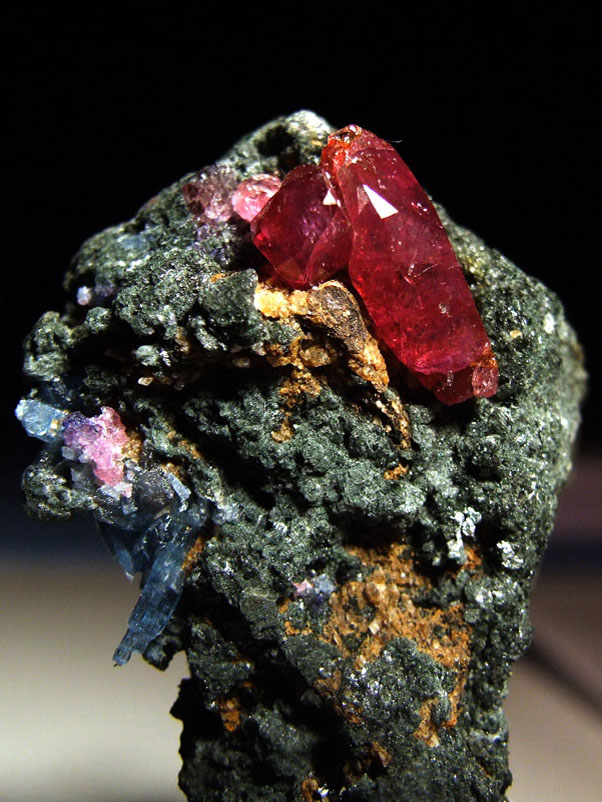
3. Alumina - the sticker - combines well with silica make the glass tough and bonds the glaze to the clay because it is a main ingredient in clay. Rubies and sapphires are crystalline forms of alumina.
Other optional ingredients in smaller amounts include metal oxides such as copper, iron or cobalt to add color or change the quality of matte, translucency, or opalescence, In a "reduction firing" oxygen is taken out of the kiln, or the amount of oxygen in the kiln is “reduced,” and metal oxides give up their oxygen and change color.
Different types of the three ingredients, added in different proportions, and in different combinations, and fired on different clay bodies, at different temperatures with different fuels, for different lengths of time produce different results! Not to mention the varying influence of the kiln gods on any given day....

Silica – 12.9
Custer Feldspar- 44.6 (a flux containing mostly potassium)
Whiting – 21.8 (Calcium flux)
China Clay - 14.85 (Supplies alumina and silica)
Lithium oxide - 5.9 (another flux)
II. Beer is just
1. Hops
1. Hops
2. Yeast
3. Sugar (from malted barley)
And yet….like glazes, the complexity astounds.
 | |||||
| AMatt's bubbling yeast waiting to be added to the cooled wort (boiled hops and malt). |
Simcoe (hops) IPA

III. Cucumbers, Cabbage, and Carrots - three veggies that don't require cooking in the heat of mid July. Basic ingredients that help them along seem to come in threes. So simple, yet so complex!
1.Half-sour sun-fermented cucumbers:
Heat it to dissolve the salt, add to sliced cucumbers, dill with roots and sliced garlic. Shake. Sit in sun for two days….


2. Boubie's Cucumber Salad
Salt the thinly sliced cucumbers and let them stand for at least a half an hour, then drain water. Add:
1/4C lemon juice, 1/4C white vinegar, 1tsp-2tsp sugar. Onions, dill.
 |
| Mug by Pam Lau, Claire's first cherry tomatos with basil, olive oil and cheese, cucumber salad |
3. Tangy Coleslaw:
1 C Vinegar, 1C Olive Oil, 2/3 C Sugar
Some mustard powder, celery seed with cabbages, carrots, onion…